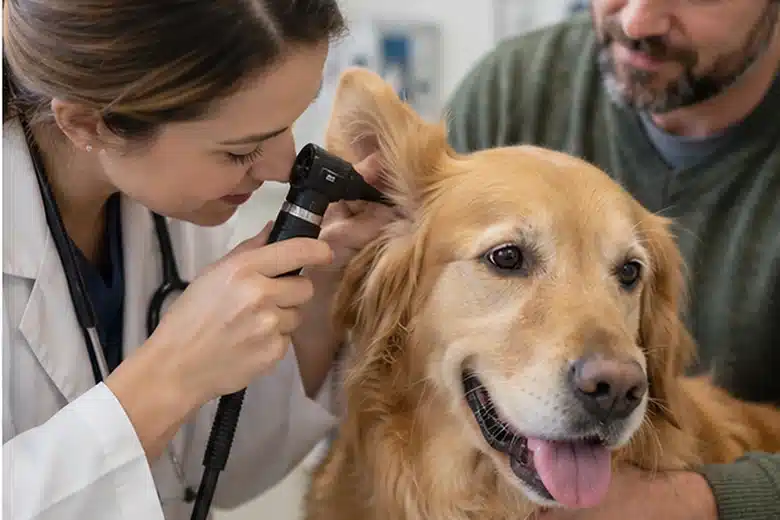
Exam/otoscopy
Clinical purpose
Evaluates the ear canal and eardrum where possible
Coverage question
Are exam and diagnostic services eligible?

An isolated new ear infection and a long record of recurring otitis can create different insurance timelines.
Use these checkpoints to frame the literal question before reading the full guide.
Pet insurance may reimburse treatment for an ear infection when the condition and services are eligible under the current policy. Separate a new isolated episode from recurrent ear disease or an underlying allergy, then identify the first documented signs relative to the policy start. Review the exam, otoscopy, cytology or culture, medication and recheck as distinct charges.
The sections below show how to verify the answer and what can change it.
Merck Veterinary Manual describes otitis externa as inflammation of the external ear canal and notes that diagnosis can involve history, otoscopic examination and cytology. It also emphasizes identifying contributing causes to reduce recurrence. For insurance, that makes the longitudinal record important: repeated ear visits or allergy findings before coverage can matter to how a later episode is evaluated.
| Item | Clinical purpose | Coverage question |
|---|---|---|
| Exam/otoscopy | Evaluates the ear canal and eardrum where possible | Are exam and diagnostic services eligible? |
| Cytology or culture | Identifies organisms/inflammation | Is laboratory testing part of the eligible workup? |
| Medication | Topical/systemic treatment as prescribed | Are prescription medications eligible? |
| Recheck | Confirms response or persistence | Are follow-up visits covered for the same condition? |
Evaluate as a new event using the current policy and record.
Review the pre-existing-condition definition and the documented recurrence pattern.
The insurer may evaluate the broader condition history, so keep dermatology/allergy records with the ear timeline.
Keep policy terms, deductible, reimbursement and limits beside the quote so the comparison stays consistent.
The veterinarian decides what care is clinically appropriate. The policy separately decides whether each expense is reimbursable.
Ear infections can require more than one visit and may recur. Before assuming a covered first visit guarantees later reimbursement, check whether the later episode is treated as continuation of the same condition, a recurrence, or a new event under the policy. The answer should come from the contract and claim record, not from the diagnosis name alone.
No. It still has to satisfy the policy, timing and history rules.
Potentially, because recurrent otitis can be associated with underlying causes. Use the actual medical record and policy definition.
Not necessarily. Verify follow-up visit and recurring-condition rules in the policy.
Keep the policy terms beside the price, then continue to rates when the comparison is clear.